Picture
YASI WAS HERE: Where once there was thick forest and a solid green, shady canopy, tangled, broken tree limbs open to the sunshine characterise forest after Tropical Cyclone Yasi had been through.
WILDWATCH by   ANNE WILKINSON.

What an amazing region this is!  When one really looks around, how well the forest is recovering after the ravages of Cyclone Yasi.

Yes, there are still dead and dying trees, many having fallen and now lodged in others. There are still out-of-reach “hangers” waiting for either wind or natural decay to bring them down necessitating care when walking and the need to remember to look up every now and then to make sure it is safe.

From that point of view this is still heartbreak country.


Picture
Photo Ron Darlington- 19 May 12

Lot 11 SP171882 Explorer Drive,
Sth Mission Beach

There is a lot of concern, or to be more correct, disbelief being expressed by community members as they watch a hillside lot at South Mission Beach being developed.
The approval of an eight residential lot development within prime cassowary habitat has resuslted in the destruction of an important cassowary corridor at Mission Beach.  It was approved on all levels of government, the outcome being totally contrary to the promises in the application referred to the federal government environment department.  It highlights the lack of planning that allows this shocking, unacceptable practice to continue.


Hello from Coquette Point,

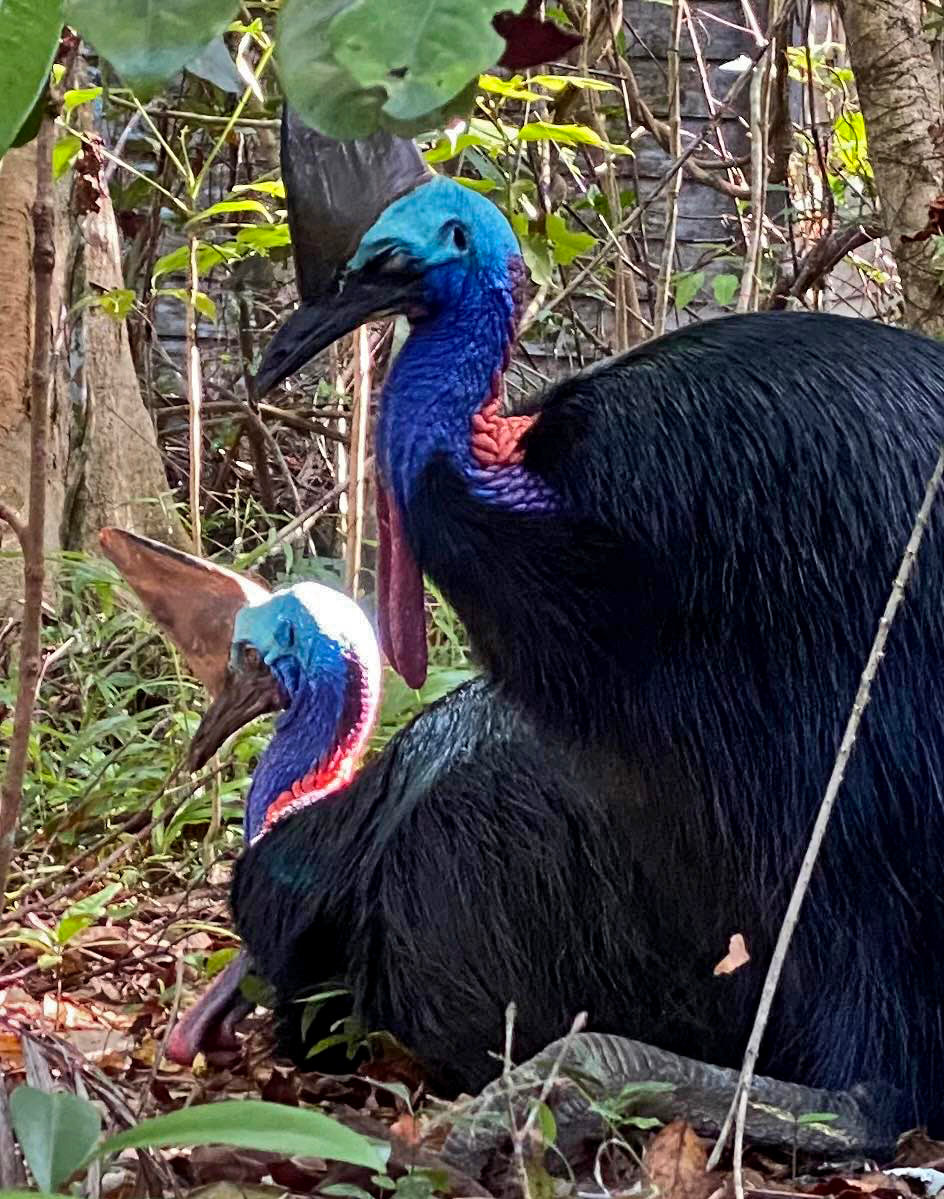
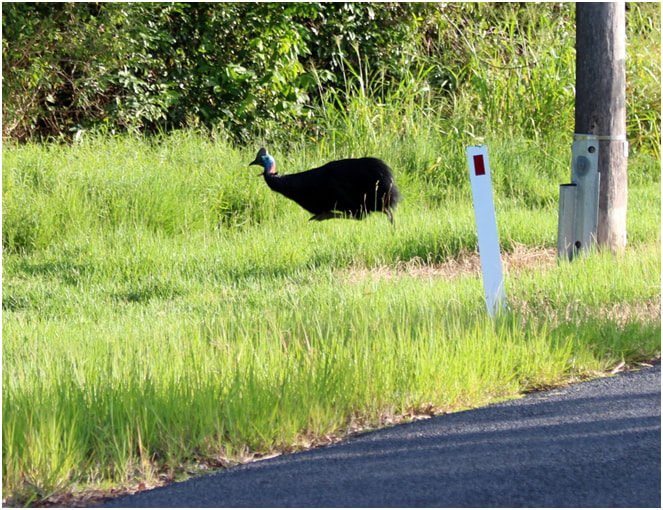
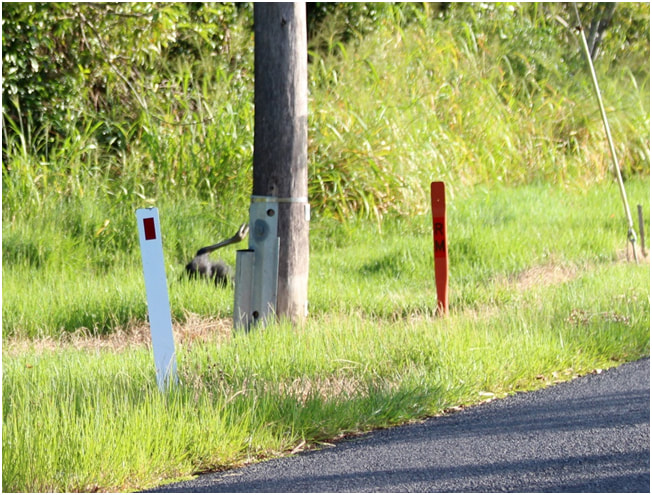
I was told by Jake a CCRC staffer that on Wednesday he saw a small male cassowary with three chicks near the new sewerage works alongside Ninds Creek. The chicks were about 40cm tall and their stripes were only just visible. Before Jake or the other workers could take a photograph Dad and the chicks disappeared into the rainforest: wonderful and surprising news.

It is most unusual for cassowary chicks to be born during winter. However, as no chicks were born last year in the Moresby Range/ Coquette Point area perhaps the cassowaries are catching up, after cyclone ‘Yasi’,  now that the forest is producing food again.


Dear Mr Brennan

I have noticed flagging tape through the Cowley dune last weekend south of the boat ramp, presumably marking the proposed new road route? I understand all permits have not yet been obtained to undertake the works and would like to ask why the work to date was ever performed, given that there is presumably a possibility that permits might not be granted to allow the work to continue?


Here is an update on correspondence to the CCRC regarding the battle to protect Cowley Beach from  vehicles driving on the sensitive beach environment most recently threatening the survival of  the young turtle hatchlings. 

On the 10th May 2012  Richard Piper emailed the CCRC
as follows;  Dear Kim and others copied in,
I would like to discuss what is still going on with vehicles at Cowley beach with you.


Hello from the fairy garden at Coquette Point,

I was walking in my garden early Wednesday morning and low and behold I found a van and beside it a tent full of French backpackers. I took a few photos and left them undisturbed to sleep. Later that morning, quite coincidentally,  my neighbour brought his big tractor through on our internal connecting track and he was astonished to see a tent with eight legs running before him.  Above the French screams John W roared with laughter.  Take a look down the bottom of your garden, you never know what you may find.


Picture
Listen to the interview with Daryl Dickson
One of Australia's most endangered mammals may have been pushed closer to extinction by cyclone Yasi.

Fifteen months after cyclone Yasi, towns like Cardwell and Tully still clearly show the devastation the storm visited on homes and businesses.

It is harder to assess the damage that the cyclone has done to the homes of native wildlife with many areas still inaccessible. 

Natalie Fernbach talks to Daryl Dickson on radio ABC North Queensland about the endangered Mahogany Glider.                                                                                                                   Read More


Picture
SPOT THE BIRD: The wonderfully camouflaged nightjar or hammer bird. Picture by Victor Dowd.
WILDWATCH:   by  ANNE WILKINSON

Some years ago, most of our nights here in the Wildwatch forest would be disturbed by a regular sound. It was just as if a neighbour had decided to hammer in a post and was setting stoically about the task.

Once one realised it was a bird, not a thoughtless human making it, the noise, like that of so many other wild sounds at night, seemed to blend in and it was hard to be irritated.


Award winning documentary team in town

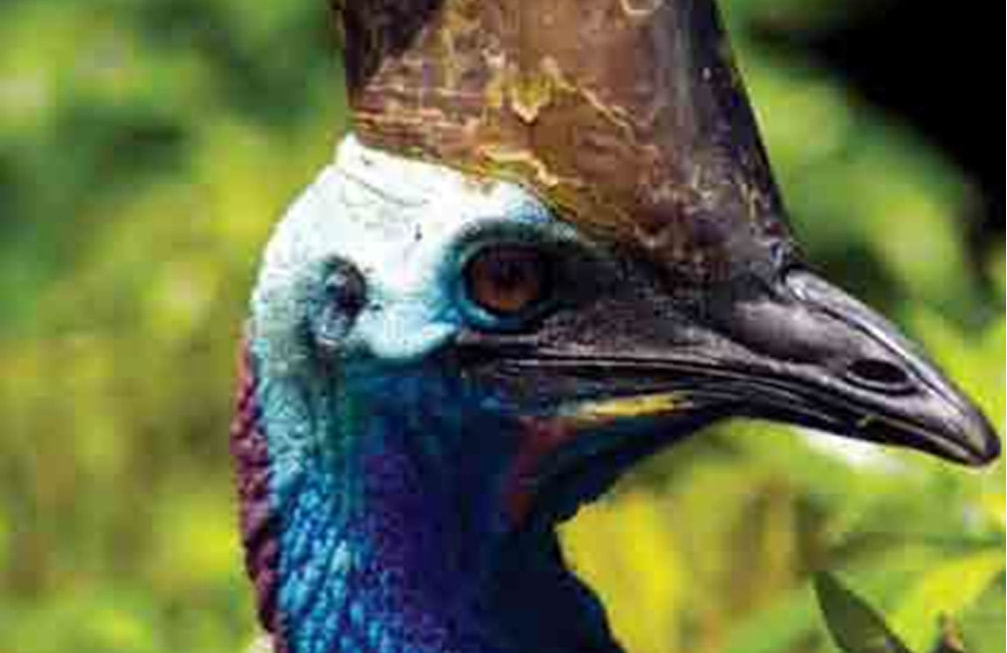
Had a fantastic day with intrepid explorer/adventurer biologist - Niall McCann, Gryphon Productions producer Peter von Puttkamer and crew who recently  travelled from Townsville to the Daintree documenting the Cassowary.

The award winning Canadian team is in Australia putting together the Saltwater Crocs and Cassowary episode of their 'Biggest and Baddest' series  which will air on Discovery Channel in January 2013. 


Hello from mysterious Coquette Point,

As the Super Moon rose tonight I am sure I saw ‘dark creatures’ coming out from the shadows.  An eerie eh-eh-eh- call murmured and then shrieked within the mangroves.